


Joint Tenancy vs. Tenants in Common: Understanding the Key Differences in Property Ownership
- News 15 July, 2026
When two or more people invest in real estate together, the most important decision they make is how they will hold title to the property, as it will affect their ownership for a lifetime. It includes decisions like what happens to property after an owner’s death, how ownership interests can be transferred or sold, and other similar decisions. There can be many ownership adjustments, amongst them, joint tenancy and tenants in common are the most commonly adopted ones. Many people consider them identical and use these terms interchangeably. In reality, there is a significant difference between these two adjustments. Let's discuss them in detail.
What Is Joint Tenancy?
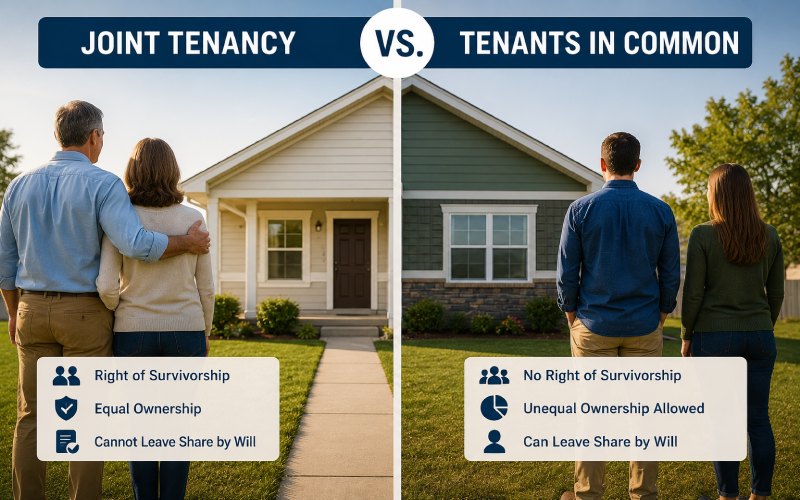
Joint tenancy is a form of co-ownership where all owners own equal interests in the same property. When any co-owner dies, the other person automatically gains the right to the deceased partner’s share. It is called the right of survivorship, which is a defining feature of joint tenancy.
What Are Tenants in Common?
Tenants in common are also a widely implemented form of property ownership. Its features are:
- Each owner holds a separate ownership interest.
- Ownership percentages may be equal or unequal.
- There is no automatic right of survivorship.
Ownership Shares
If we compare joint tenancy with tenants in common, one of the major differences will arise in ownership structures.
Joint Tenancy
Here, all owners hold equal shares of the property.
For example:
- Two owners each hold 50%.
- Four owners each hold 25%.
Tenants in Common
Here, ownership share may or may not be equal.
Examples include:
- 50% and 50%
- 60% and 40%
- 70%, 20%, and 10%
Right of Survivorship
Joint Tenancy
If one owner dies:
- The surviving owner automatically receives the deceased owner's share.
- The transfer generally occurs outside the probate process.
Tenants in Common
If one owner dies:
- Their ownership interest doesn’t automatically transfer to the surviving partner.
- It is distributed as per their will.
Can an Owner Sell Their Interest?
- Joint Tenancy: In the case of joint tenancy, a tenant may sell or transfer their ownership interest, but it generally results in the conversion of joint tenancy to a tenancy in common arrangement among the remaining partners.
- Tenants in Common: Here, each owner has the right to sell, transfer, or mortgage their ownership share without requiring the consent of other owners.
Which Ownership Structure Is Better?
Both joint tenancy and tenancy in common serve different purposes:
Joint tenancy may be appropriate if:
- The owners want automatic transfer upon death.
- Equal ownership is intended.
- Probate avoidance is a priority.
Tenants in common may be preferable if:
- Owners contribute different amounts.
- Flexible ownership percentages are needed.
- Each owner wants the ability to leave their interest to heirs or beneficiaries.
Common Situations
Joint tenancy is generally preferred by:
- Married couples
- Family members
- Long-term partners
Tenants in common are considered more appropriate in the case of:
- Business partners
- Friends purchasing investment property
- Siblings
- Real estate investors
When Should You Consult an Attorney?
You should consider consulting a real estate attorney when:
- You are purchasing property with someone else.
- Estate planning is a concern.
- Multiple investors are involved.
- You are unsure which ownership structure best meets your goals.
- You want to prepare or review a property agreement.
Common Mistakes to Avoid
Here are some of the most common mistakes that you should avoid when choosing a form of property ownership:
- Assuming all co-ownership arrangements work the same way.
- Overlooking estate planning consequences.
- Ignoring ownership percentages.
- Failing to understand survivorship rights.
- Purchasing property without carefully reviewing title documents.
Frequently Asked Questions (FAQs)
What is the Biggest Difference Between Joint Tenancy and Tenants in Common?
The right of survivorship is the primary difference between a joint tenancy and tenancy in common. It is related to the transfer of ownership rights in the case of a deceased owner.
Can Tenants in Common Own Different Percentages of a Property?
Yes, it is a primary differential between joint tenancy and tenants in common.
Can a Joint Tenant Sell Their Share of the Property?
Yes, a joint tenant may sell their share of the property, depending on state law. Still, it generally converts the joint tenancy into tenancy in common for the remaining owners.
Conclusion
Joint tenancy and tenants in common are two of the most commonly adopted ways of holding real estate by multiple owners. They are both significantly different from each other, yet many people consider them the same and use them interchangeably. In today’s article, we understand their meaning, nature, how they are different from each other, factors to consider while selecting, and more. In the end, we hope you enjoy reading this post and find it informative. If so, then do share this post with others as well.

The Best 5 Will and Trust Contest Attorney Firms in California



Protecting Your Wealth in Divorce

The Hidden Costs of a Personal Injury: Why Acting Fast Matters

The Hidden Risks of Parking Lot Accidents at the Beach

Legal Drinking Age in Florida: What Every Parent and Minor Should Know


Moving to New Zealand With a Partner: Understanding the Visa Pathway
