

Understanding Business Liability: What Companies Should Know When Injuries Occur on Their Property
Running a business involves managing a wide range of risks, from operational challenges to financial obligations. One area that business owners sometimes overlook is the potential legal exposure that can arise when someone is injured on their property. Whether the injury involves a customer, contractor, vendor, or visitor, businesses may face liability if unsafe conditions contributed to the accident.
Understanding how premises liability works and how businesses can reduce their risk is an important part of responsible management and long-term stability.
What Is Premises Liability?
Premises liability refers to the legal responsibility property owners and operators have to maintain reasonably safe conditions for people who enter their property. When businesses invite customers, clients, or partners onto their premises, they generally assume a duty to identify and correct hazards that could reasonably cause harm.
If an unsafe condition exists and the owner fails to repair it, warn visitors, or prevent access to the hazard, the business may be responsible for injuries that occur as a result.
Premises liability claims most commonly arise from accidents such as:
-
Slip and fall incidents caused by wet floors or spills
-
Uneven walkways or damaged flooring
-
Poor lighting in stairways or parking lots
-
Falling merchandise or unsecured shelving
-
Broken railings or unsafe staircases
-
Snow or ice accumulation outside entrances
Although accidents can occur anywhere, courts typically examine whether the business took reasonable steps to prevent foreseeable risks.
Why Businesses Face Increased Risk
Businesses often experience a higher volume of visitors compared to private properties. Restaurants, retail stores, office buildings, and commercial complexes may see hundreds or thousands of people pass through their doors each week. The more visitors a property receives, the greater the likelihood that unsafe conditions could eventually lead to an injury.
For example, a small spill in a grocery store aisle may go unnoticed for several minutes. During that time, customers walking through the area could slip and suffer serious injuries. If the business failed to implement reasonable inspection procedures or neglected to place warning signs, liability may arise.
Legal professionals who handle injury cases frequently analyze whether property owners followed proper safety procedures and whether hazards were addressed in a timely manner. In situations where injuries occur due to negligence, individuals may seek guidance from a personal injury lawyer in Denver or similar legal professionals to understand their options.
Who Can Be Responsible for an Injury?
Responsibility for accidents on commercial property is not always limited to the business owner. In many cases, multiple parties may share responsibility depending on how the property is maintained and managed.
Potentially responsible parties may include:
-
Property owners or landlords
-
Businesses leasing commercial space
-
Property management companies
-
Maintenance contractors
-
Cleaning or janitorial services
-
Security companies
For instance, if a maintenance company was hired to repair damaged flooring but failed to complete the work safely, both the contractor and the property owner might be involved in liability discussions.
Determining responsibility often requires careful examination of maintenance records, contracts, inspection procedures, and incident reports.
Steps Businesses Can Take to Reduce Liability
While no property can eliminate every risk, businesses can significantly reduce their exposure to liability by implementing proactive safety measures.
Conduct Routine Safety Inspections
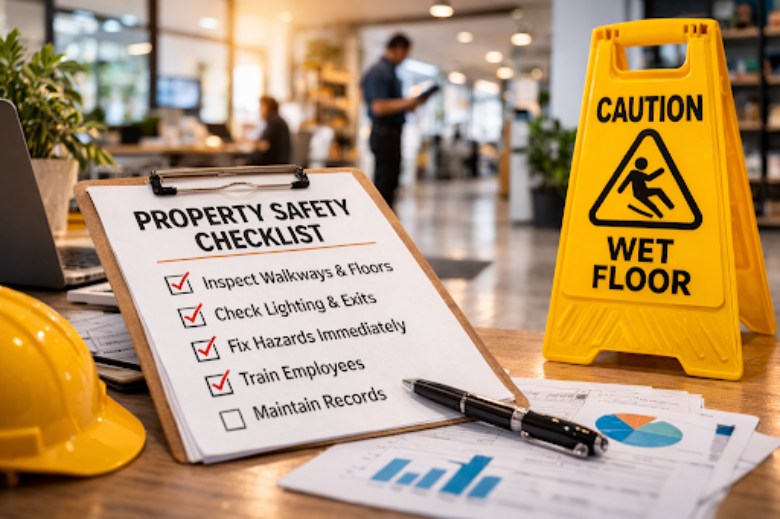
Regular property inspections help identify hazards before they cause harm. Businesses should routinely check areas such as entrances, staircases, walkways, parking lots, and storage areas.
Inspection checklists can help ensure that common hazards are not overlooked and that maintenance issues are addressed promptly.
Respond Quickly to Hazards
When a hazard is discovered, it should be corrected as soon as possible. If immediate repair is not possible, temporary solutions such as warning signs or barriers should be used to prevent injuries.
For example, placing a “Wet Floor” sign after cleaning or mopping can significantly reduce the risk of slip and fall accidents.
Train Employees to Identify Risks
Employees are often the first to notice safety concerns. Providing staff with basic safety training can help ensure hazards are reported quickly and handled appropriately.
Training may include:
-
Reporting spills or unsafe conditions
-
Maintaining clear walkways
-
Proper storage of inventory
-
Responding to accidents or medical emergencies
A well-trained staff plays a critical role in maintaining a safe environment.
Maintain Adequate Lighting
Poor lighting is a common contributor to accidents, particularly in stairwells and parking areas. Businesses should regularly inspect lighting systems and replace damaged fixtures or bulbs promptly.
Proper lighting improves both safety and security for customers and employees.
Maintain Appropriate Insurance Coverage
Even businesses with strong safety programs should maintain appropriate insurance coverage. Policies such as general liability insurance and commercial property insurance can provide financial protection when accidents occur.
Insurance providers often recommend that businesses review their policies periodically to ensure coverage aligns with current operations.
When Legal Advice Becomes Important
In some situations, accidents can lead to complex disputes involving insurance providers, property owners, or third-party contractors. When serious injuries occur, businesses may need legal guidance to understand their responsibilities and potential liability.
Legal professionals who focus on injury law can help evaluate accident circumstances, review insurance coverage, and assist with resolving disputes. Individuals who have suffered injuries may also consult attorneys experienced in Colorado personal injury law to determine whether negligence contributed to the accident.
Early legal evaluation often helps clarify responsibilities and can prevent misunderstandings between parties involved in a claim.
Building Safer Business Environments
Ultimately, reducing liability risks is not only about avoiding legal claims. Creating a safe environment benefits customers, employees, and the business itself. Companies that prioritize safety often experience fewer operational disruptions and stronger trust from the communities they serve.
By conducting regular inspections, training employees, maintaining property conditions, and addressing hazards quickly, businesses can significantly reduce the likelihood of accidents occurring on their premises.
For business owners, understanding how liability works and taking proactive steps to reduce risk is one of the most effective ways to protect both people and long-term business success