

Who Is Liable When Space Debris Falls Back to Earth?
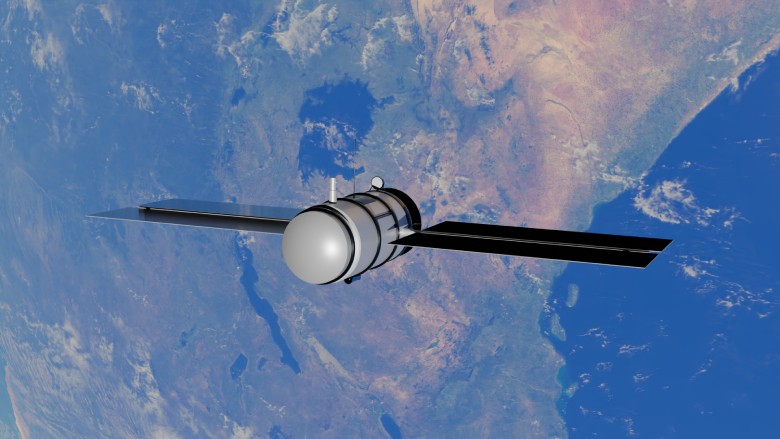
Space debris may sound like a problem that belongs far above us, but when objects fall back to Earth, they can create very real risks for people and property.
As more satellites, rockets, and other objects are sent into orbit, the amount of material eventually returning to Earth is also growing. According to Our World in Data, 4,510 objects were launched into space in 2025, far surpassing the previous peak of 2,903 objects in 2023.
US agencies and companies were responsible for 3,708 of those launches, or 82% of the global total. The majority of these U.S. launches involved small satellites deployed into massive commercial constellations. These interconnected satellite networks now make up the majority of objects sent into orbit.
But what happens when one of these objects comes back down and damages a home, vehicle, or injures someone? Who is responsible for the resulting damage? The answer can depend on the type of object, who launched it, where the incident occurred, and which laws apply.
Why Space Debris Is Becoming a Bigger Concern
There are tens of thousands of objects orbiting Earth, including active satellites, spent rocket parts, and fragments from past collisions. According to The Guardian, more than half of the 60,000-plus objects ever launched into space have already decayed and reentered the atmosphere. Most burn up during reentry, but larger pieces can survive and reach the ground.
The problem is growing as space exploration shifts from government-led missions to a private satellite industry. SpaceX launched its first Starlink satellites in 2019, beginning the era of massive “mega-constellations” made up of thousands of smaller spacecraft. Other companies, including Amazon, are now adding to the number of active satellites.
Jonathan McDowell, an astronomer who has tracked space objects for decades, warns that satellite collisions could eventually trigger a chain reaction. The risk may remain manageable today, but the growing number of objects makes future debris and liability concerns harder to ignore.
The Legal Framework Behind Space Liability
Responsibility for space debris does not fall under a single global court or regulator. Instead, it is governed by a patchwork of treaties negotiated during the early decades of spaceflight, long before commercial launches became routine. International space law establishes rules for countries and space operators, including responsibility and liability for damage caused by space objects.
Cleveland State University explains that space law covers liability for damage caused in space or by space objects when they return to Earth. Two key agreements form the foundation of this framework: the 1967 Outer Space Treaty and the 1972 Liability Convention.
The Outer Space Treaty makes countries internationally responsible for space activities carried out by their government agencies and private companies under their jurisdiction. The Liability Convention goes further, making a launching state absolutely liable for damage caused by its space object on Earth, even when fault is not proven.
However, these rules were created when space programs were largely government-run, making liability more complicated in today’s commercial space industry.
Why "Launching State" Isn't Always Simple to Determine
Figuring out which country is legally responsible for a space object can be more complicated than it sounds. Under the Liability Convention, a “launching state” can mean the country that launches an object, arranges for its launch, or provides the territory or facility from which it is launched. This means more than one country can qualify for the same mission.
For example, a rocket could be built by a company in one country, launched from another, and carry a satellite owned by a company in a third. If that object later falls to Earth and causes damage, determining which country bears liability can become complicated.
The treaty allows claims between states, but it does not create a global enforcement system for resolving every dispute. As a result, governments may need to rely on diplomatic discussions to settle liability questions rather than turning to a single international court.
How Claims Actually Get Resolved
Claims involving space debris are rare, and when they do arise, they are usually handled through diplomatic channels rather than a global court. A country whose citizens or property are damaged can bring a claim against the launching state under the Liability Convention.
One of the best-known examples is the 1978 crash of the Soviet satellite Kosmos 954 in Canada. The crash scattered radioactive debris across a 124,000-square-kilometre area of northern Canada, prompting a joint Canadian-American search and cleanup effort.
Nearly all the recovered satellite fragments were radioactive, with some considered potentially lethal. Canada later filed a formal claim seeking compensation for its cleanup and related costs.
The dispute was not resolved quickly. More than three years after the crash, Moscow agreed to pay Canada C$3 million to settle the claim. The example shows how lengthy and complex the claims process can be, with governments often having to negotiate compensation before a dispute is resolved.
The Growing Role of Private Companies
Commercial spaceflight makes liability even trickier. Under the Outer Space Treaty, nations stay responsible for private launches, so governments usually make companies carry insurance or agree to cover the state's potential losses.
In the U.S., launch operators need liability insurance to get licensed through the FAA. That shifts much of the real financial risk onto private companies, even though the international responsibility technically still sits with the government.
And private companies are only becoming bigger players. According to The Conversation, more than 10,000 Starlink satellites already circle the Earth. Additionally, SpaceX has now announced plans to launch one million more satellites as orbital data centers for AI computing.
As commercial launches keep outpacing government missions, it's fair to wonder whether the current rules can really keep up with a landscape this different from what they were built for.
FAQs
Who is responsible if space debris falls on Earth?
Under international space law, the launching state can be held liable for damage caused by its space object on the surface of Earth. Determining the responsible state can be complicated when multiple countries are involved in launching, operating, or providing the launch site.
What happens if a satellite crashes into a house or vehicle?
If space debris causes damage on Earth, the affected country can pursue a claim against the relevant launching state under the Liability Convention. Claims are generally handled through diplomatic channels rather than through a global space court.
Do private space companies pay for damage caused by their satellites?
Private companies may bear the financial costs through insurance or indemnification agreements required by their governments. However, under international space law, the government remains internationally responsible for national space activities carried out by private entities under its jurisdiction.
Key Space Debris Statistics
|
Objects launched into space in 2025 |
4,510 |
|
Previous peak number of objects launched in a year, 2023 |
2,903 |
|
Objects launched by U.S. agencies and companies in 2025 |
3,708 |
|
U.S. share of global launches in 2025 |
82% |
|
Objects ever launched into space |
60,000+ |
|
Starlink satellites currently in orbit |
10,000+ |
|
Area affected by Kosmos 954 radioactive debris |
124,000 sq. km. |
|
Compensation paid by the Soviet Union to Canada |
C$3 million |
|
Additional satellites SpaceX has announced plans to launch |
Up to 1 million |
Liability for falling space debris sits at the intersection of decades-old international agreements and a rapidly changing commercial space industry. The Outer Space Treaty and Liability Convention provide a framework for holding launching states responsible for damage. However, applying those rules can be complicated when multiple countries and private companies are involved.
As more satellites and spacecraft enter orbit, determining who ultimately bears the financial and legal responsibility for debris-related damage may become increasingly difficult. Governments, regulators, and space companies will need to navigate these challenges as commercial activity expands, making space debris liability an increasingly important issue

Can an Emergency Justify Violating a Distracted Driving Statute?
Who Is Liable When Space Debris Falls Back to Earth?
How Negligence Affects the Outcome of an Injury Claim